



2026-08-20
How to Choose the Right ERP System for Managing Your Company’s Accounting and Resources?
Learn how to choose the right ERP system to manage accounting, resources, inventory, and operations within your company, along with the key criteria that will help you make the right decision.
How to Choose the Right ERP System to Manage Your Company’s Accounting and Resources?
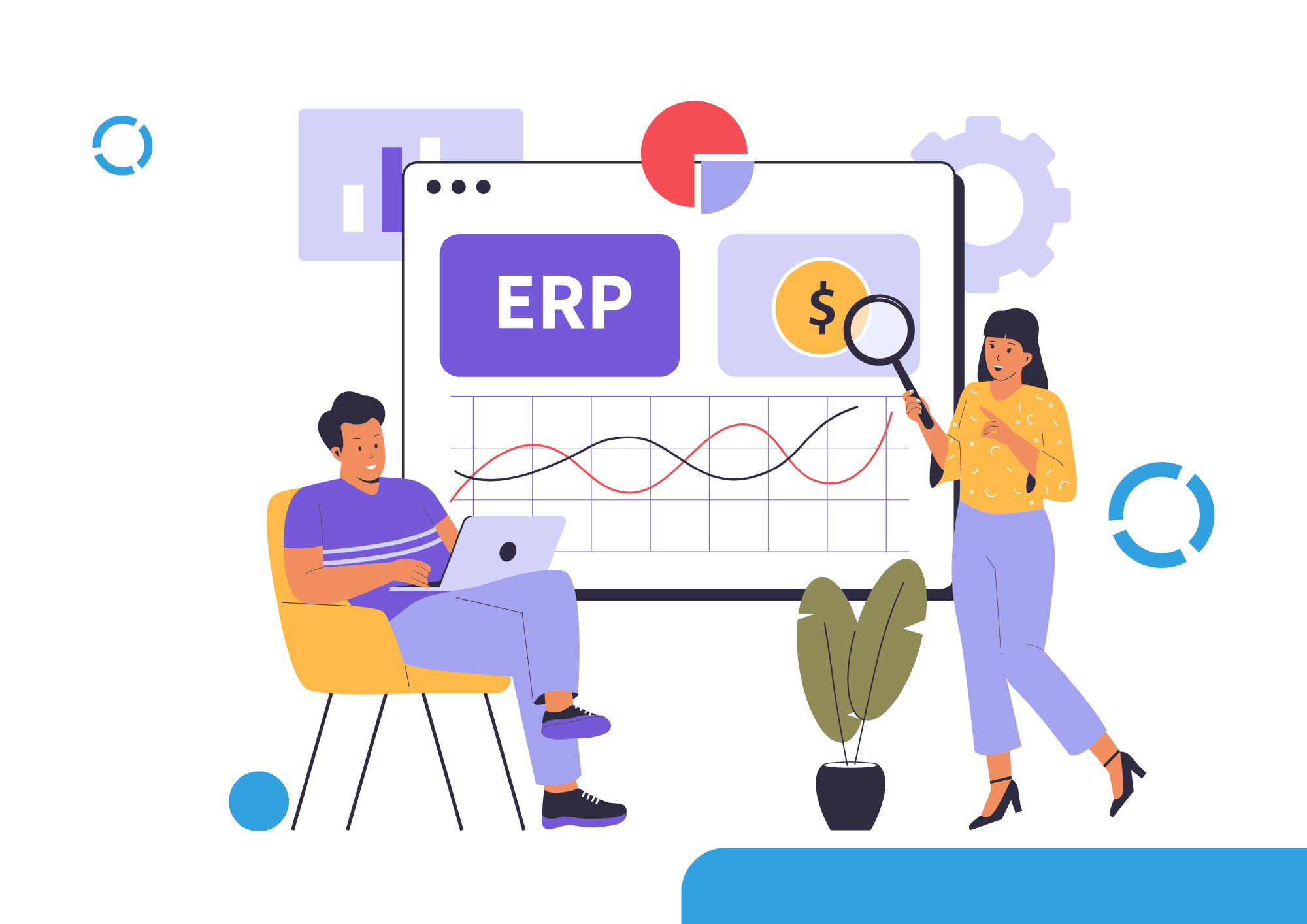
As businesses expand and the volume of daily operations increases, companies face significant challenges in managing accounting, inventory, purchasing, human resources, and sales. This is where an Enterprise Resource Planning (ERP) system comes in. It helps unify all business processes on a single platform, improving operational efficiency and reducing errors.
However, with the wide range of ERP systems available, choosing the right one can be challenging. In this article, we’ll explore the most important criteria to help you choose an ERP system that meets your company’s needs and supports its growth.
What Is an ERP System?
An ERP (Enterprise Resource Planning) system is an integrated software solution that connects all departments within a company through a single system, allowing data to be shared between departments in real time.
Instead of using separate software for accounting, inventory, or human resources, an ERP system brings all these functions together on one unified platform.
Why Does Your Company Need an ERP System?
An ERP system helps you:
-
Manage financial accounting accurately.
-
Organize sales and purchasing processes.
-
Track inventory in real time.
-
Manage human resources and payroll.
-
Generate invoices and reports.
-
Improve workflow between departments.
-
Reduce errors caused by manual data entry.
-
Support decision-making through reports and analytics.
How Do You Choose the Right ERP System?
1. Identify Your Company’s Needs First
Before looking for any system, ask yourself:
-
Do you only need accounting management?
-
Do you have more than one warehouse?
-
Do you manage multiple branches?
-
Do you need employee and payroll management?
-
Do you want to integrate the system with your e-commerce store or website?
The clearer your requirements are, the easier and more accurate the selection process will be.
2. Choose a Customizable System
Every company has a different business model, so a ready-made system with fixed settings may not always be the best fit.
A good ERP system should allow you to:
-
Add new features.
-
Modify workflows.
-
Create customized reports.
-
Customize user permissions.
This gives you greater flexibility as your business grows.
3. Make Sure It Is Easy to Use
No matter how powerful a system is, it will not deliver the desired results if it is too complicated.
Look for a system that offers:
-
A simple interface.
-
Easy navigation between departments.
-
Quick access to data.
-
A convenient user experience for employees.
Ease of use reduces training time and increases team productivity.
4. Integration with Other Systems
It is preferable to choose an ERP system that can integrate with:
-
Your website.
-
Your e-commerce store.
-
CRM systems.
-
Online payment gateways.
-
Shipping companies.
-
Point-of-Sale (POS) systems.
This integration saves time and prevents duplicate data entry.
5. Reports and Analytics
The system should provide accurate reports that help management monitor the company’s performance, such as:
-
Profit and loss.
-
Sales.
-
Inventory movement.
-
Purchasing.
-
Employee performance.
-
Cash flow.
The more comprehensive the reports are, the easier it becomes to make informed decisions.
6. Security and Data Protection
An ERP system contains sensitive financial and operational data, so it should provide:
-
Data encryption.
-
Regular backups.
-
User permission management.
-
Activity and change logs.
-
Protection against security breaches.
Security is an essential element that should never be overlooked.
7. Scalability
Your company may start with a limited number of employees or branches, but your business will grow over time.
Therefore, choose a system that can accommodate:
-
New branches.
-
Additional users.
-
New departments.
-
Increasing data volumes without affecting performance.
8. Technical Support and Maintenance
Even the best systems may require updates or technical support.
Make sure to choose a company that provides:
-
Fast technical support.
-
Regular updates.
-
Troubleshooting and issue resolution.
-
User training.
-
Development of new features when needed.
Having a professional support team ensures business continuity without unnecessary downtime.
Should You Choose a Ready-Made or Custom ERP System?
This depends on the nature of your business.
Ready-Made ERP Systems
They are suitable for small businesses with limited requirements, but they may impose restrictions on customization and scalability.
Custom ERP Systems
These systems are developed specifically to meet your company’s business requirements and offer:
-
Greater flexibility.
-
Customized features.
-
Integration with existing systems.
-
A higher level of security.
-
Future development capabilities.
For this reason, many medium-sized and large companies rely on customized ERP solutions.
Mistakes to Avoid When Choosing an ERP System
Some of the most common mistakes include:
-
Choosing a system based on price alone.
-
Purchasing a system with features you do not need.
-
Ignoring ease of use.
-
Failing to plan for future growth.
-
Neglecting technical support and maintenance services.
-
Not involving different departments in the selection process.
Avoiding these mistakes can help you get the maximum value from your investment.
Conclusion
Choosing an ERP system is a strategic decision that directly impacts your company’s efficiency and growth. Therefore, don’t focus solely on price. Instead, look for a system that offers flexibility, ease of use, security, scalability, and ongoing technical support.
If you are looking for an ERP system specifically designed around your company’s needs, working with a specialized software development company can help you obtain an integrated solution that enables you to manage accounting, resources, and operations efficiently while providing a strong foundation for future business growth.
// Related News & Blogs
Related News & Blogs
Discover the amazing benefits of having a website for your business
In today's era of modern technological development, the idea of creating a website for brands and companies, in general, has become indispensable. Not only that, but this website must also have content optimized for search engines to rank high in search results, thereby becoming more recognized by the target audience. All of this aligns with the general goal of companies: significantly increasing sales, whether you are the owner of a company, a restaurant, or even a service provider wanting to create a comprehensive website to introduce people to your services and also boost sales effectively. Here are the key details for creating a distinctive and effective website.
2026-01-21
Read More
How does a website contribute to increasing your sales?
Many people wonder about the main benefits of a website in general for institutions and companies, and its role as an effective digital marketing tool in this era, aiming to reach a larger customer base and achieve the highest sales rate. Today, in this article, we present to you the most prominent benefits of a website and how to achieve the best sales ratio thanks to the constantly updated content on the site, along with key tips for improving the website's SEO. We also discuss how to enhance and maintain a lasting relationship between service providers and clients in general through good content on the website that answers their questions and resolves all issues related to them.
2026-01-21
Read More
Learn What Software Companies Do
In the era of digital transformation, software development companies have become essential partners in driving business success and growth. Having a professional website, a fully integrated e-commerce store, a mobile application, or an intelligent accounting system is no longer a luxury; it has become a necessity to stay competitive and enhance customer experience. Software development companies offer a wide range of technical services that help businesses achieve their goals more efficiently. These services begin with analyzing client requirements and understanding the nature of their business, followed by designing and developing suitable software solutions, and extending to ongoing technical support and maintenance. Choosing a professional software company provides numerous advantages, including customized solutions tailored to your business needs, improved operational efficiency, time and cost savings, as well as strengthening your digital presence and increasing opportunities to reach your target audience. Modern software companies also rely on the latest technologies and industry best practices to deliver digital products that offer high performance, user-friendly experiences, enhanced security, and scalability for future growth. For this reason, software solutions have become one of the key drivers of success and sustainable growth for organizations seeking to stand out in an increasingly competitive market. Whether you own a startup or manage a large enterprise, investing in professional software services is a strategic step toward building a strong digital future and achieving long-term business growth.
2026-06-15
Read More